news
April 29, 2026
From Fish Ponds to Fresh Produce: The Evolution of the Latino Center of the Midlands’ Health & Innovation Garden
In South Omaha, a 7-acre piece of land tells a story of legacy in action. For more than a century, this space has been shaped not by a single purpose, but by the people who continually adapted it to meet the needs of the community. Today, that same legacy continues through the Latino Center of the Midlands’ Health and Innovation Garden—where history is not just remembered, but actively built upon.
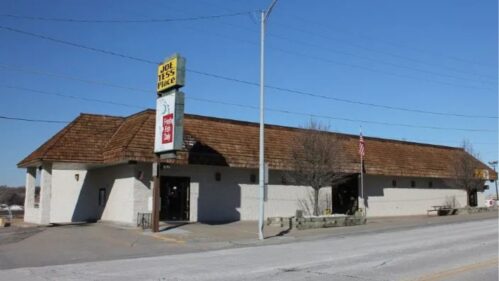
In the early 1900s, the land served as a residential area from 1901 to about 1926. Later, it took on a new role rooted in food and local tradition. In 1951, commercial fisherman Joseph Tesnohlidek built three large fish ponds on the property to meet the growing demand for his wife’s carp sandwiches at Joe Tess Place, a South Omaha staple.
Decades later, the land use shifted. By 1975, portions of the property were used as an unlicensed landfill by Gammel Construction and later by the City of Omaha Street Maintenance Department. Eventually, the property was donated to the City of Omaha around 1995 and capped in 2000, marking a turning point toward restoration.
What came next was shaped by neighborhood advocacy. Long before the land was capped, residents like Dorothy Patach cared for the acreage and advocated for its transformation into green space for the community. In 2001, the Omaha City Council honored Patach’s dedication to her neighborhood, the environment, and public health by designating the site as the Dorothy Patach Natural Environmental Area—helping carry her vision forward. From 2015 to 2024, that vision continued to develop as City Sprouts transformed the space into a community garden, bringing people back to the land and reconnecting them to food, nature, and one another.
Today, that same vision lives on.
Since 2024, the Latino Centers’ Cultivate Wellness program has provided South Omaha families with opportunities to grow fresh food, learn gardening skills, and strengthen community connections.
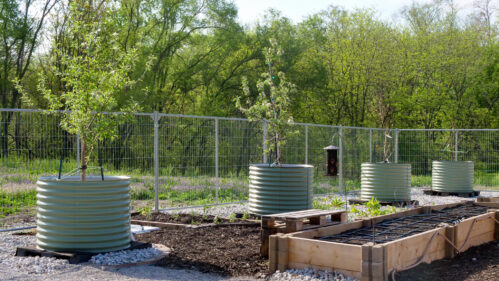
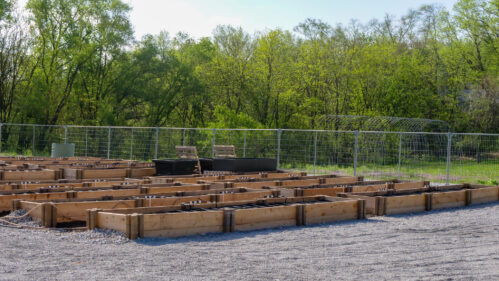
This work has been intentional and hands-on. The garden has been rebuilt from the ground up with leveled terrain, improved drainage, and new fencing. As the team prepares for the 2026 growing season, the expansion from 36 to 48 raised beds will give more families the chance to grow their own food and take part in something bigger.
For more than a century, this land has never stayed still—it has shifted, adapted, and been reshaped by the people who saw its potential to serve others. Each chapter reflects a different moment in South Omaha’s story, but all are connected by the same thread: a commitment to serving the community. As families grow food, learn together, and build new connections, they are not starting something new—they are continuing something already in motion.